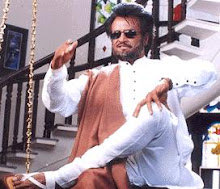
The last time I met Satyajit Sarna (unimaginatively nicknamed 'Surd'), in a few hours, and for a few hours, I forgot who, where or what I was. When I met him before that, after being in the legendary Queens Bar in T.Nagar and the highly underrated Ranjith rooftop in Nungambakkam, for some reason, I woke up in a room at the Taj Coromandel. The next day, at the Madras High Court, various people wanted their photo taken with what they thought was an alien apparition -- a six-plus-feet tall Sardar in an advocate's gown!
Here, I talk to him about his first novel, published this June by Harper Collins, The Angel's Share.
***
 |
| The author poses with mint vodka that tasted like mouthwash. |
When I heard that you were writing a novel, I wasn't surprised. Somehow you seemed like the sort of guy who would want to tell a story. But I must admit that given the range of literature you read, and the sort of things you tend to talk about (in our bizarre interactions over the years), I was a little surprised when I heard you were writing a campus novel. This genre, in the context of Indian writing in English in the last decade, brings its own limitations, expectations and biases, doesn't it? What pushed you to write about Law School?Well, to the extent I was thinking about it, I was following advice. They say you should sort-of bleed the autobiographical urge out of yourself, write it, get your own voice out of your head and onto paper and then either publish it, or print it out on a nice big sheaf of paper and lock it up in a drawer. The danger, if you don’t do that, is that the stories you need to tell start showing up in the stories you want to tell. So you get science fiction with a little campus novel in it, and your detectives have coming-of-age issues. The way I see it, if as a writer you feel a need to write a coming-of-age book, you might as well write it so your space cadets and detectives don’t end up with student angst.
So when I sat down and started typing, I decided to go with the flow and tell the stories that I did know, and they came together and grew with time to become
The Angel’s Share.
What's wrong with detectives who have coming-of-age issues or a sci-fi set on a campus of some sort? Wouldn't that sort of thing set the novel apart amongst that genre? Are literary genres like ragas that have strict goalposts within which an artist’s creativity is channelled?Ha ha, of course! That would be wonderful, and there is great work along those lines which exists.
Ender’s Game by Orson Scott Card is one of my favorite books that way – a sort of schoolboy story told against a background of interstellar war. What I meant was an unintentional urge to write
exactly what you saw into a narrative where it would sit uneasily…
The IITs had Five Point Someone, and the IIMs got the "MBA" series (Mediocre, but Arrogant; Married, but Available and so on). (Have you read these novels?) Law schools don't have a definitive campus novel yet, although there have been attempts to write one. You think The Angel's Share fills that market void?I read
Five Point Someone in third year, and I honestly enjoyed it. It was a light read which appealed to me because I was in college and it was a college book – there was an immediate empathy. It also perversely appealed to me because I liked reading Big Books, and it was the exact opposite of a Big Book and so it felt like cheating. I read it in the back row of class, returned it to the owner and thought that it may be the last I heard of it. Boy, was I wrong!
Campus novels have fallen a long way in the perception of the reading public, which may be a fair assessment of the quality of work we’re seeing, given how many of them are mass-market clones of
Five Point Someone.
Coming-of-age, the Bildungsroman, is a very evocative genre– a lot of great writing has come out of it. And as my friend Aditya Sudarshan says,
This Side of Paradise is a campus novel. But the tag does make me uncomfortable still.
The Angel’s Share has a couple of settings; I’m not sure I’d have written it or tried to have it published if I had written only a campus novel. In my head it’s a story about youth and growing up. But I’d like to think that if you wanted to tell a story about law schools or law firms in India, you’d have to think about
The Angel’s Share and ask yourself if someone got there first.
It's funny you should mention This Side of Paradise, because when I read it, I actually thought, "Hey, Satyajit could write a novel like this!" And in continuing with the Fitzgerald theme, there was also Zorawar who is, in some ways, Nick Carraway to Sasha's Gatsby.I think that what you may be doing is upgrading me vastly by association. I thank you kindly, but fear that you are far too generous.
The Great Gatsby remains my favourite book of all time, and I reread it every year or so. Every time, I see more than I saw the last time, which is incredible given that it’s an even shorter book than
The Angel’s Share.
I see where you’re going when you contrast Nick-Gatsby with Zorawar-Sasha, but there is a little difference in the dynamic, even while Zoju plays the straight man to the inspirational personality of Sasha. If Zoju wasn’t so callow and insecure, Sasha wouldn’t shine so bright, and if Nick wasn’t a non-judgmental Midwesterner, than the East Coast opulence of Gatsby wouldn’t seem so mythical, and Nick’s judgment in the end wouldn’t be so damning.
But, in
Gatsby, Jay Gatsby is squarely at the centre of the book. The big question is how big Nick is - does he tell the truth fairly? How much does he grow and change independently of Gatsby? Zorawar is a lot more active than Nick and his growth and story is more central by comparison.
If I may refer to another one of my favourite books, I could venture that maybe, in Jack Kerouac’s
On The Road, the relationship between Sal Paradise and Dean Moriarty is a better example. Dean appears and disappears and changes Sal’s life, but the story is about Sal. Dean is more the idea of Dean, and less the person of Dean. And so Sasha.
However if you had to point to a
hero in these three books, I feel that you could without hesitation point to Jay Gatsby, Dean Moriarty and Sasha Kapur.
Your novel is intensely personal. It is about people you've known intimately, and spaces you've inhabited for a considerable period of time. Did the familiarity make writing it easier or tougher?Some of the characters are based on traits I saw in real people, and on events that I saw or heard about. But when you sit down to write fiction, it’s impossible to tell it like it happened. The rules of fiction are different from the rules of life. Events happen in a very diluted non-causal fashion. People are a lot more alike than they are different. You blur lines, mix and match, exaggerate – do the verbal photoshopping you have to make an interesting picture. What familiarity does help with is description. When I need to describe a setting, I can just tell it like I saw it.
There are things you take for granted when writing about National Law School. For instance, you mention the "Five Buck Shop" and "Amma" without really explaining who or what they are. Would that put off outsiders? Or are these things not really central to the plot anyway?Hopefully, neither ‘Five Buck Shop’ nor ‘Amma’ would put off readers. I tested some of these terms on ‘outsiders’ before publishing it, and it appears that anybody who went to college had a Five Buck Shop AND an Amma. There’s an institutional logic to these elements, and its bound to be common to most colleges. If, however, you have ever been to Nagarbhavi and stared into the deep and knowing gaze of Amma, then the reading experience may be so much more the deeper for you.
I’m now trying valiantly to recall whether I still owe any money at Five Buck Shop or to Amma. I think I cleared my tabs at Convocation, but the details are hazy…
There was a moment in the novel when I thought I must launch into a diatribe about Sanskritisation and Westernisation. When you mentioned that for our generation of Indians, cricket was no longer the number one sport, I wanted to jump into the pages of the novel and talk about how Westernising city kids have shifted to football, but for the Sanskritising small-towners (like myself), cricket (which used to be the upper class, elite, city-game) was still number one. This is not a question. I feel like faffing, and I faffed. You may comment, however.I see your point. Of course I meant this in the context of urban India, where the rise of football is self evident and is definitely influenced by televised international sport and focused marketing by the English Premier League and companies like Nike and Adidas. You are right in that this rise of football is not even across India and that for the vast majority of children in India, cricket is their one true love.
That said, the way I hear it from my granddad, the sports he used to play as a child, and even past independence, the sports that really held the Indian imagination were football and hockey. If you look at the past of Indian football, the Durand Cup predates all but two tournaments and clubs like Mohun Bagan and Mohammedan Sporting have very old and storied pedigrees. Maybe the history of subcontinental sport would have been different if FIFA had allowed India to play the 1950 World Cup barefoot…
I’m no expert but the rise of Indian cricket in the sixties probably has a lot to do with decolonization and the scars it left on the Indian psyche – a need to ape our colonial masters, perhaps. It’s not an obvious fit for our conditions – the equipment is expensive, a proper pitch and grounds are very hard to maintain – but cricket-like games happen everywhere.
I could go on, but so could you. That’s how faffing works.
That’s one skill Law School really taught us, didn’t it? I wouldn’t be half the man I am without it.Some would say that’s an improvement.
In a report somewhere, it was written that your novel exposes "hard-hitting truths" about National Law School. It made me smile slimily. Your reaction to that (not to my slimy smile, but to the phrase)?I smiled slimily. I did not intend to write a comforting and sweet paean to NLS. I love the institution and had a fantastic time of it myself, and telling the truth should take nothing away from it. NLS is an amazing college with great alumni, a unique culture and the remarkable achievement of having changed the face of legal practice in India by example. But every institution requires honest assessment, and nothing is perfect.
While The Angel’s Share isn’t a report on the functioning of NLS, it does shine a light on the life of the college that outsiders probably don’t see. The biggest problem with NLS in the years we were there is probably that nobody wanted to tell the truth about anything – infrastructure, safety and security, quality of teaching, lack of effort from students, parochialism, discipline, drug abuse – and nobody wanted to hear it. If the institution and its stakeholders (including us) had been more honest and forthcoming, and more willing to listen to each other, I think we’d have learnt more, done better and a lot of people wouldn’t have graduated with such a bitter taste in their mouths. The courage to talk about things is something that I wish we had possessed as an academic community in those years.
I hear that these things have gotten a lot better, and that’s great to hear. I hear exam papers don’t have roll numbers on them, and that there is an actual functioning ‘open-door policy’. I hear that extracurricular activities get more support from administration. Fewer people lose years now and thankfully, the suicide rate is dropping.
You talk of lack of effort from students, drug abuse, discipline – and these were issues that our professors often cribbed about… Remember the time when a professor said he wouldn’t send his daughter to NLS because he saw a guy and a girl make out on the tennis court? Isn’t this (and the consequential lack of student-teacher dialogue) a symptom of a problem that is fairly central to the incident that led to Sasha’s death in The Angel’s Share – of a cultural disconnect between Law School students and the people around them? Law School was a bubble. Maybe it still is. The world within was culturally, politically, linguistically different from the ‘Portugal’ outside. I would hesitate to draw that link so explicitly because the saddest part about Sasha Kapur’s death is that it dealt to him by unknowns as random act of unthinking violence. When you attribute causality, you reduce the world to a simpler thing than it is.
If you had to dedicate this novel to three storytellers (novelists, film directors, playwrights -- storytellers), who would they be? And why? The first would be Jack Kerouac, the patron saint of youth in search of itself. The second would be Bob Dylan, who signals to me that at no point in your life need you run out of stories to tell or avatars to slip into. I think they should hurry up and give him the Nobel Prize for Literature already; it’s embarrassing that they haven’t. The third would be Nick Hornby, because more than anything else I have read,
High Fidelity and
Fever Pitch spoke to me and my passions and whispered that fiction is a mask we wear so we can speak the language of empathy.
What about sympathy and genuiness?:)
Your father is a novelist, and a fairly well-known one at that (I must admit that when I first saw We Weren't Lovers Like That on the shelf of a bookstore, I thought it would be vaguely erotic). That’s because you have a filthy mind.
Guilty as charged. Please tell him that I loved The Exile? Will do.
Did having him around help you write this novel? Say, in understanding what it takes to write one -- schedules, deadlines, self-discipline and things like that? Did you pick up these things osmotically? Or how to approach publishers with a manuscript? How to deal with editors? Anything?I only wish I had the discipline of my father, who wakes up early and works at a steady pace, and makes a certain amount of progress on his projects every day. The writing process is something that differs vastly for different people and you just have to find the key that works for you.
It was helpful to have a published author tell you to keep at it, keep your expectations in check and not to give up when the rejections come in, or worse, with the interminable waiting for the rejections to come in.
More than any tangible assistance, I would say that it’s a tremendous boost psychologically. Writers are booklovers first, and I grew up in a house of books. My paternal grandparents are both famous writers in Punjabi. To have books and writing in the family means that writing is not alien or terrifying. After this many years of reading, of hearing one side of a conversation, you just want to open your mouth and say something yourself. Writing makes the world of books a dialogue and not just a monologue.
***
The Angel's Share can be bought online -- this link will tell you the options you have in India. And Amazon has it here. But keep those brick-and-mortar bookstores alive; look there first?


 Posts
Posts